



خبر
 خانه / خبر / اخبار صنایع / Air Hose & Fitting Types Compared: Quick-Connect vs. NPT vs. Industrial Couplers
 Air Hose & Fitting Types Compared: Quick-Connect vs. NPT vs. Industrial Couplers
 2026.06.22
 اخبار صنایع
For most workshop and home compressor setups, quick-connect fittings are the best choice due to their tool-free attachment and detachment. NPT (National Pipe Thread) fittings are better suited for permanent or semi-permanent installations where a leak-tight seal is critical, while industrial couplers are designed for heavy-duty, high-flow applications where durability and airflow matter more than convenience.
Below, we compare these three fitting types in detail — covering connection speed, airflow, durability, and the specific scenarios where each performs best.
Why Fitting Type Matters as Much as the Hose Itself
A high-quality air hose is only as reliable as the fitting connecting it to your tool or compressor. Mismatched or low-quality fittings are responsible for a significant share of air leaks in pneumatic systems — some studies on compressed air systems estimate leaks account for 20-30% of total compressor energy waste, and poor fittings are a major contributor.
Beyond efficiency, the wrong fitting type can also create safety hazards, such as hoses disconnecting under pressure or threads stripping over repeated use. Understanding the differences between quick-connect, NPT, and industrial couplers helps you avoid both problems.
Quick-Connect Fittings: Speed and Convenience
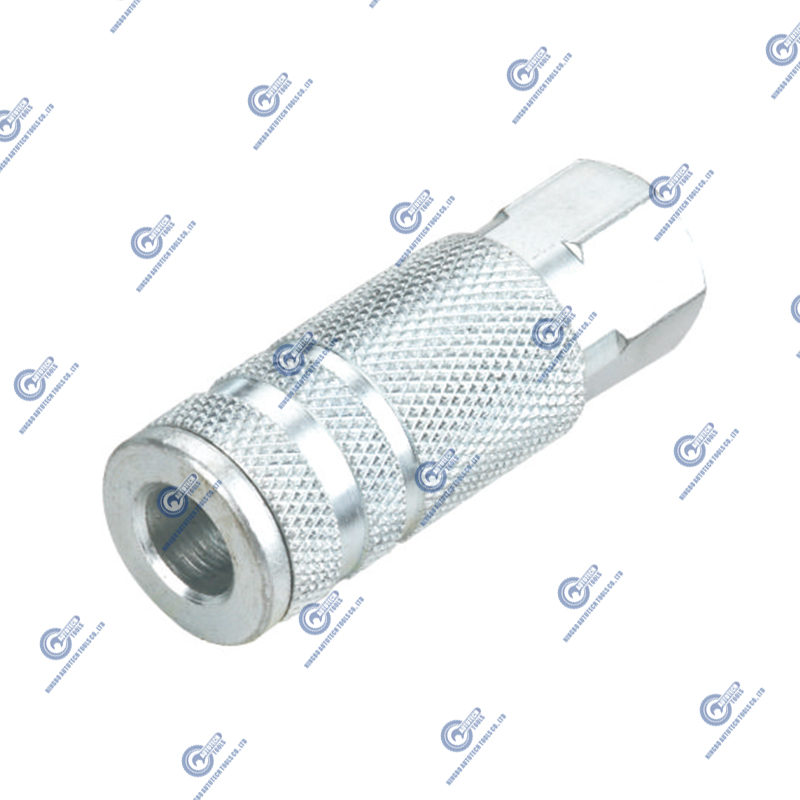
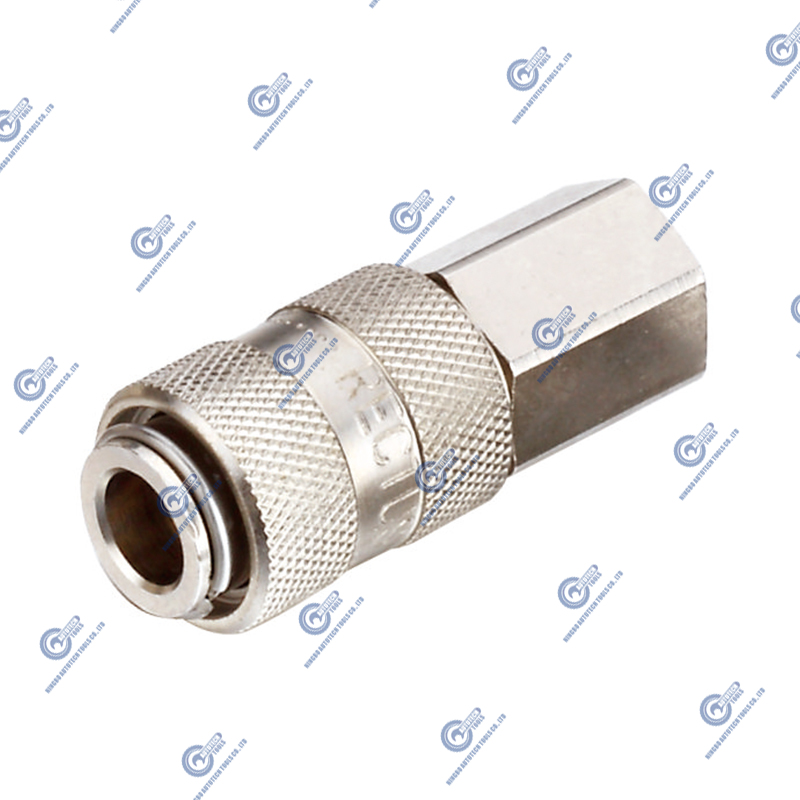
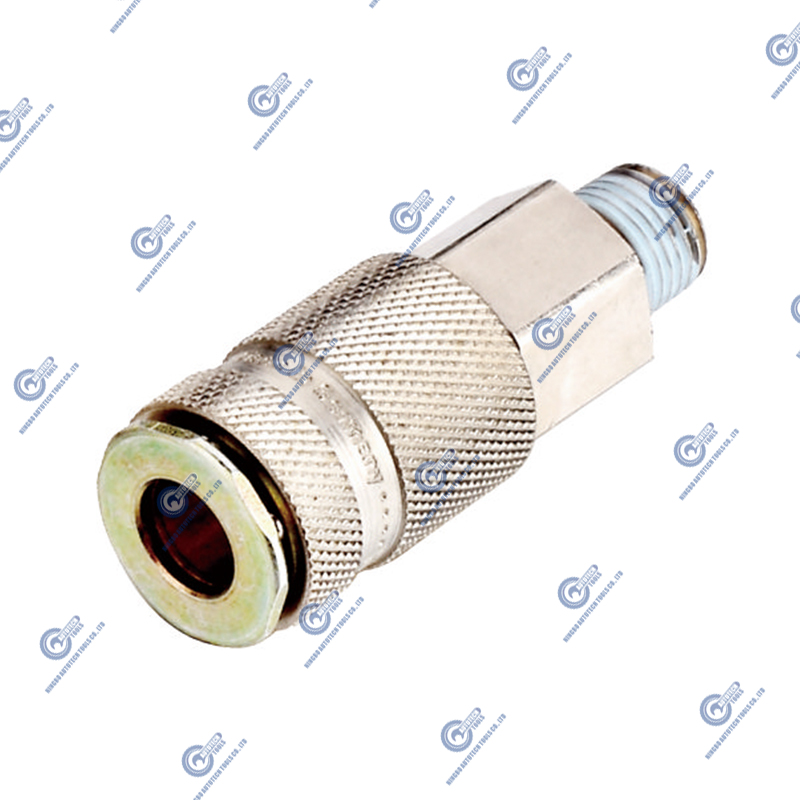
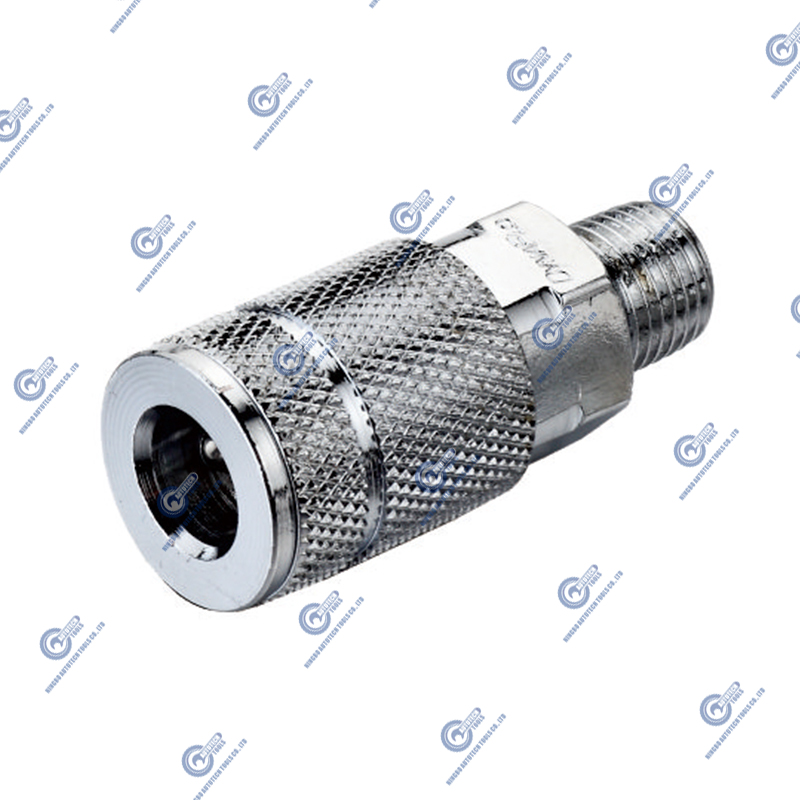
Quick-connect (also called quick-disconnect) fittings allow hoses and tools to be attached or removed in seconds without wrenches or thread sealant. A spring-loaded collar locks the connection in place, and pulling it back releases the hose instantly.
Advantages
- Tool-free operation: No wrenches or thread tape required for connection or disconnection.
- Fast tool switching: Ideal for workshops where multiple tools share one air line.
- Built-in shutoff valves: Many designs stop airflow automatically when disconnected, reducing air loss.
Limitations
Quick-connect fittings introduce a slight restriction in airflow due to their internal valve mechanism. Flow loss can range from 10-15% compared to a straight-through NPT connection, which matters for high-CFM tools like sandblasters or large grinders.
NPT Fittings: Reliable, Leak-Tight Connections
NPT (National Pipe Thread) fittings use tapered threads that create a tight mechanical seal as they're screwed together, typically reinforced with thread sealant or PTFE tape. This design produces one of the most leak-resistant connections available for compressed air systems.
Advantages
- Superior seal integrity: Tapered threads bite into each other, virtually eliminating leak points when properly installed.
- No internal flow restriction: Straight-through design allows full airflow with no valve obstruction.
- Widely standardized: Compatible across most compressors, regulators, and fittings sold in North America.
Limitations
NPT connections require tools to install or remove, making them impractical for frequent tool changes. Repeated tightening and loosening can also wear down threads over time, eventually requiring fitting replacement.
Industrial Couplers: Built for Heavy-Duty Use
Industrial couplers (sometimes called industrial interchange fittings) are a heavier-duty version of quick-connect fittings, designed for high-pressure, high-flow environments such as construction sites, manufacturing floors, and large-scale pneumatic systems.
Advantages
- Higher pressure tolerance: Often rated up to 300 PSI or more, exceeding standard quick-connect fittings.
- Larger bore size: Reduces airflow restriction compared to standard quick-connects, supporting high-CFM tools.
- Durable construction: Typically made from hardened steel or brass to withstand repeated heavy use.
Limitations
Industrial couplers come in multiple incompatible standards (such as ARO, Milton, and Industrial Interchange), so mismatched coupler styles won't connect even if they look similar. Always confirm the exact standard used across your entire system before purchasing.
Side-by-Side Comparison
The table below summarizes the core differences across connection speed, airflow, pressure rating, and ideal use case.
| Feature | Quick-Connect | NPT | Industrial Coupler |
|---|---|---|---|
| Connection Speed | Instant, tool-free | Slow, requires tools | Instant, tool-free |
| Airflow Efficiency | Moderate (10-15% restriction) | High (no restriction) | High (larger bore) |
| Typical Pressure Rating | Up to 150-200 PSI | Up to 250+ PSI | Up to 300+ PSI |
| Best Use Case | Frequent tool switching | Permanent installations | Heavy-duty industrial use |
Compatibility Tips Before You Buy
Mixing fitting types or standards without proper adapters is one of the most common mistakes buyers make. Keep the following in mind:
- Identify your compressor's existing fitting type before purchasing hoses or tools, to avoid needing multiple adapters.
- Check coupler sub-standards: Industrial couplers especially vary by brand (ARO 210, Industrial 6-ball, etc.) and aren't always cross-compatible.
- Verify thread size and pitch for NPT fittings (commonly 1/4" or 3/8" NPT) to ensure a proper seal.
Final Recommendation
For home workshops and general tool use, quick-connect fittings remain the most practical choice due to their speed and convenience, despite a minor airflow tradeoff. For permanent installations such as shop air lines or compressor outlets, NPT fittings provide the most reliable, leak-free connection. For construction sites and industrial environments requiring high airflow and pressure tolerance, industrial couplers are the better long-term investment, provided all components match the same coupler standard.
In many real-world setups, a combination of all three is common — NPT fittings at fixed compressor outlets, with quick-connect or industrial couplers at the tool end for flexibility.

شرکت Ningbo Autotech Tools ، Ltd در سال 2014 به عنوان تولید کننده حرفه ای دریچه های تایر ، ابزار تعمیر تایر و اتصالات سریع هوا تأسیس شد.
پیوندهای محصول
با ما تماس بگیرید
-
آدرس: شماره 16 جاده گائوقیانگ ، منطقه صنعتی جیانگن ، شهر گائوقیا ، منطقه یینژو ، نینگبو ، چین. 315175
-
Tel:+86-0574-89073063
-
ایمیل: jimmy@autotechtool.com
کپی رایت © Ningbo Autotech tools Co., Ltd.
